

I started investing when I was 19 with a small inheritance my grandfather left me. I was studying engineering, knew nothing about investing and proceeded to make my fair share of mistakes. I bought cheap automakers, expensive IPOs, a sexy 3D-glass company and sold Google for a quick profit to pay for a trip to Greece (up 25X since for anyone keeping score).
Needless to say, I had no idea what I was doing. I read a couple of stock-market books, but nothing really clicked.
Then, after graduating and joining JPMorgan’s Private Bank, I stumbled upon the Buffett shareholder letters and became completely hooked. I read the entire archive on Berkshire’s website in less than a week (I got very little work done that week) and then devoured anything I could find related to Buffett, Berkshire and value investing. It felt like I had discovered a new religion.
For the first time, I knew exactly what I wanted to do with my life: become a professional stock-picker following the Buffett principles of value investing. I could not believe people got paid to do something so competitive, entertaining, and intellectually stimulating.
So I spent the next nine years laser-focused on finding my way into a job in public equities. I navigated through the private bank, fixed income, rates and credit, and sell-side equity research. During the pandemic, after building a bit of a following on Twitter, I decided to post my anonymous resume to see if it would lead to anything. To my surprise, it worked marvelously. I landed at a place where I thought I could spend the rest of my working days: a fundamental hedge fund.
A bit more background about myself is likely overdue. I realize some of you don’t know much about me, and up until now you’ve been reading the thoughts of an anonymous person on the internet. You deserve more.
I recently came public on Twitter, something I had been meaning to do for a while. My name is Francisco Amador. I was born in Caracas, Venezuela, grew up there, and moved to the U.S. after graduating High School to study in Worcester, Massachusetts. I have lived in the U.S. ever since — Massachusetts, Texas, New York, and most recently Florida — and I consider it home.
My ties to Venezuela, the past 17 years since I’ve left, have slowly disintegrated as the country’s political, economic and social crisis deepened. My family was forced to leave in 2010 as it was no longer safe to live there. Most of my friends did the same1. At some point, without making a conscious decision, I stopped believing I would ever see my home country return to anything resembling prosperity.
Life, as it turns out, doesn’t really work out exactly as you plan it. January 2026 brought with it two completely unrelated events that significantly altered my future.
On January 3rd, Venezuelan Dictator Nicolas Maduro was extracted from his home by U.S. Military forces and taken to a prison in Brooklyn. Nobody, no matter what they tell you, expected something as wild as this to ever happen. It seemed like a scene straight out of Call of Duty. I spent the better part of that night looking at videos of bombs going off in Caracas in complete shock.
Three weeks later, I found out that the hedge fund I was working at was going through major structural changes, which meant I had to look for a new job. That news also caught me completely off guard. I had worked with people I liked and admired, could look at almost any company that interested me, worked remotely with unusual flexibility, and was well compensated. I didn’t think that I could recreate that setup anywhere else.
Those two totally unrelated events forced a question upon me that I had not seriously asked myself in 15 years: was my life’s work really supposed to be public markets investing? For the first time, the answer was not an resounding yes.
This led me to look for the real answer. I realized that if I was being honest with myself, I was content at my previous role, but I felt like something was missing. I wanted to work on something with a clearer sense of purpose, a bigger challenge, more human interaction, and a chance to build something durable. Public markets no longer seemed to offer that in the same way. The space had become intensely crowded. I was struggling to find enough truly exciting ideas that could generate great returns. Working from home as a public-market investor could also become a lonely pursuit.
Perhaps most important, I had learned firsthand that building a durable business around stock picking is, to put it politely, a very tough proposition — there is something mildly ironic about spending your life analyzing some of the world’s best businesses but also choosing to work in one of the hardest ones2.
My one-time dream of running my own public equities fund had been smashed to pieces. The more I thought about what to do next, I realized it had to successfully pass four filters:
Give me a real sense of purpose
Present a big challenge where I could have meaningful impact
Put me in a position of responsibility alongside a high-performing team
Play a game where I could have a real edge
So I started brainstorming.
I thought about doing something in the music space, where I had built somewhat of an expertise. Maybe acquiring music catalogs? No, prices were too high, too many players crowding the space, and not enough assets where I could generate good returns.
I thought about joining a live events company that I had invested in as the head of M&A and Strategy. Interesting, sure. But that didn’t give me the sense of purpose I was looking for.
I thought about scaling what I had already been doing on the side through Sleepwell: investing in private companies and startups, where sourcing is harder, relationships matter, and you can have a more direct impact as an investor. That felt closer. But I didn’t have enough track record or deal flow to build something meaningful.
All of these paths were interesting, but none of them felt inevitable. Meanwhile, I kept coming back to Venezuela.
For the first time since I left in 2009, the outlook looked meaningfully different and more positive. Still uncertain, still messy — but no longer hopeless. I decided to study the opportunity more seriously. I looked at historical analogs: countries that opened up after decades of isolation or dysfunction, and what happened afterward to GDP growth, capital formation, stock-market returns, foreign investment, and private-equity outcomes. Vietnam. Russia. Poland. Peru. Panama.
My conclusion was simple: Venezuela was likely facing a once-in-a-generation opportunity — not only to rebuild, but to generate superior investment returns along the way for those best positioned. The only question was how to play it.
Around that time, I was fortunate to meet Vicente Zavarce, a Venezuelan tech founder who had built Yummy, essentially Venezuela’s Uber with a SuperApp angle. He invited me to participate in the company’s current investment round. I went through the numbers, studied the thesis and concluded it was an attractive opportunity and direct way to get exposure to Venezuela. So I went ahead and invested.
As I looked more closely at the details of the round, one detail jumped out: the lead investor was a fund called Arqos Capital, which had been investing exclusively in Venezuela since 2019 with an institutional structure. I had never heard of an institutional investment platform focused solely on Venezuela, much less one that had been doing it for that long.
Venezuela was literally uninvestable — a communist dictatorship under US sanctions, OFAC restrictions, expropriations and no rule of law — most institutional investors were prohibited from investing in Venezuela. So I decided to learn more and try to get in touch.
A week later I spoke to Daniel Rottenberg, the Founder and Managing Partner, after my dad put us in touch. Daniel had an impressive background: he was Venezuelan, lived in the US since he was 14 years old, went to Wharton and HBS, worked at Lehman’s proprietary trading desk and Everest Capital focusing on Emerging Markets and Distressed assets.
He then launched his own EM Hedge Fund and then pivoted into Venezuela Prime Real Estate in 2019. To put this in context, this was during the worst of a socioeconomic and political crisis: water and food shortages, electricity outages, hyper-inflation, mass emigration. His thesis was simple but deeply contrarian: buy Prime Real Estate in Caracas for scrap (a fraction of replacement value), an irreplaceable asset that could generate good cash flows in dollars, with limited downside, and at some point, in any sort of stabilization scenario, it would be worth a lot.
As Daniel and I got to know each other, I told him I was considering raising a small fund to invest in Venezuelan private companies, similar to Yummy. He was encouraging, but also warned me of all the headaches I would face: fundraising, structuring, legal, compliance, sourcing, due diligence and operating a fund in Venezuela was a indeed steep hill to climb.
Then he proposed a different idea: I should instead join him at Arqos and lead its private equity and venture capital efforts. It caught me off guard, and I said I would think about it.
Over the next few days, the opportunity started to feel obvious. Arqos had a real first-mover advantage (only one other fund had been investing in Venezuela), it was likely the best positioned investment platform in the country, it had a great reputation, network, track record and an ability to source and look at the most important and attractive deals in this upcoming recovery phase. Daniel had offered me a fast-track into the front seat of investing in Venezuela. Importantly, it passed my four filters with flying colors.
There was no way I could pass on it.
Over the past month, I’ve been making the transition from fundamental public markets investor to private investor in Venezuela, which is as polar opposites as it gets in the investment world. The learning curve has been steep, humbling and exciting. I’ve been spending time in Caracas, meeting founders and operators, and speaking to international investors that want to understand how to invest in the country. The opportunities we’re looking at are not only incredibly interesting investments, but they have the potential to have a real impact in the economy and people’s lives.
I hope to put the lessons and experiences I learned in public markets to good use and make a small contribution to the rebuilding phase of my home country. That also means I will be moving back to Venezuela after 17 years in the United States.
Sleepwell will live on as a content platform and as a vehicle for selective, high-conviction investments. But most of my time from here on will be dedicated to Venezuela and Arqos. I hope to report back with the mistakes, lessons, surprises, and stories from the ground.
I couldn’t be more excited about what the future holds.
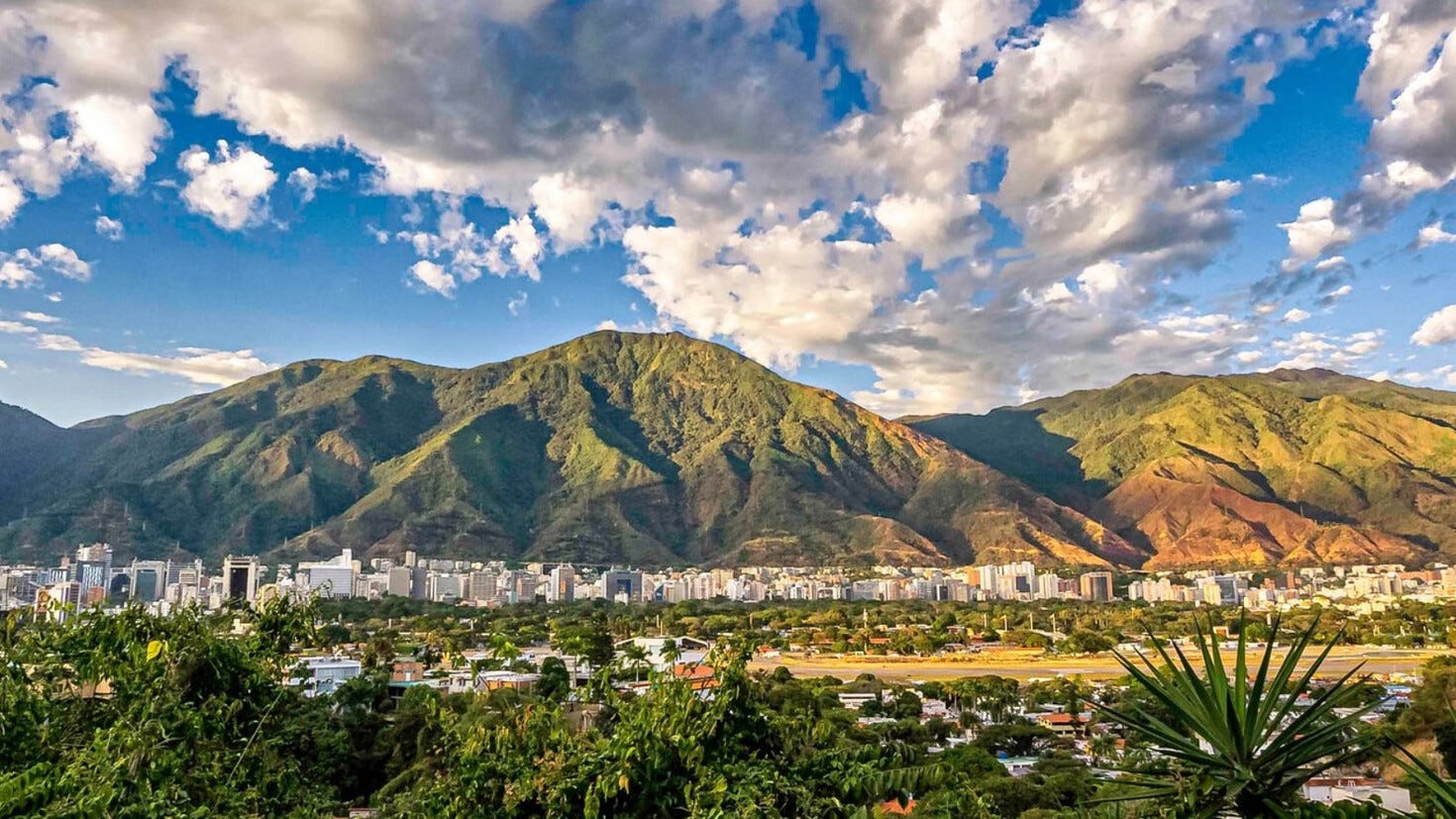
An estimated 8 million people have left since 2015, almost 1/4 of the population.
To be clear, I have tremendous respect for the people who pursue this business as their life’s work.
Congrats on the amazing journey Sleep (I still like that name), and best of luck with Arqos!
You should put together a field trip for the FinTwit crowd to Venezuela in the coming years.
Lost a good one here - best of luck with the new chapter!